Protecting Lives at Work and Sea

I grew up near the sea and have always been attracted to it. From an early age, I learned how beautiful and unpredictable it could be. I saw people I cared about get caught off guard by sudden weather changes, mechanical failures or simply a moment of inattention.
As a quality technician for more than 30 years, my work on production lines has helped protect both the environment and human lives. I’ve also been scuba diving for just as long. After repeatedly witnessing hazardous marine situations at sea, I felt a strong need to extend that same sense of protection beyond the workplace.
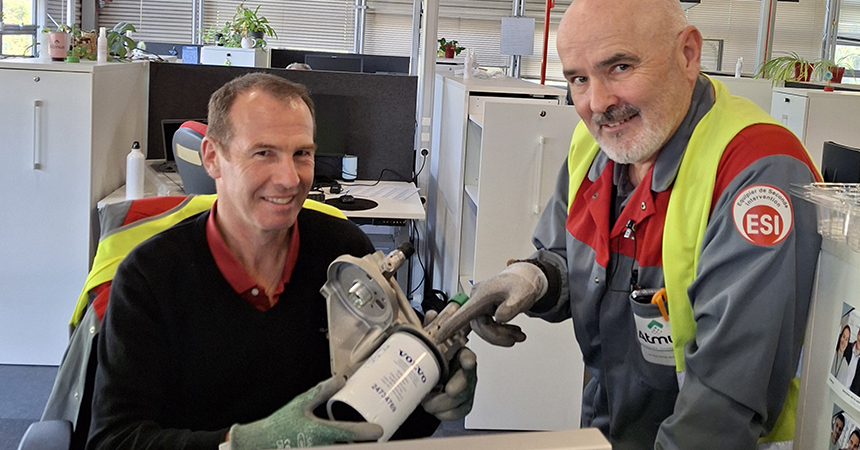
Pictured from left to right are Pierre Guine, project leader, and Martial Le Fournis, quality technician
In 2022, this passion led me to volunteer with the Société Nationale de Sauvetage en Mer (SNSM), or French National Sea Rescue Society, which was founded in 1967. Also known as Les Sauveteurs en Mer (“Sea Rescuers”), the organization is dedicated to protecting human lives at sea and along the coast, while promoting maritime safety and prevention.
That mission closely aligns with why we are here at Atmus. Creating a better future by protecting what is important — our purpose that we bring to life not only through our products, but through the way we support our people and our communities. As soon as I began volunteering with the SNSM, I felt that my volunteer work was respected and even encouraged. Having the flexibility to manage on-call duties, training and rescue interventions allows me to live out a deeply held belief: everyone has a role to play in protecting the safety of others.
Whether on the production line or out at sea, the path to success is the same. It is built through training, strengthened by prevention and achieved through collective commitment.
Training Turns Purpose Into Instinct
In quality work, you rely on standards and repeatable processes. During a rescue operation, the sea sets its own pace — sometimes abruptly. Yet the solution is the same in both cases: it’s essential to master the procedures. Every detail matters.
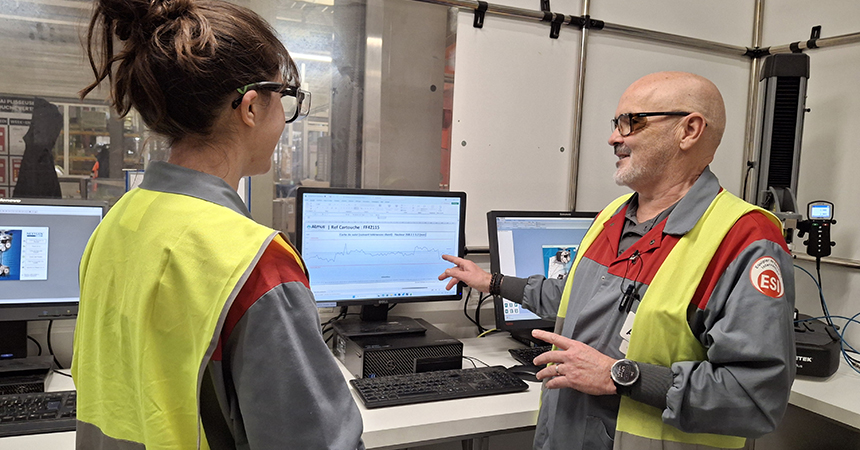
Pictured from left to right are Marion Nedelec, trainee and Martial Le Fournis, quality technician
Dramatic rescue operations attract attention and praise, but most people don’t see everything that makes them possible: the meticulous maintenance of the equipment, the drills repeated until they become automatic, the on-call duties that disrupt daily life, the hours spent analyzing the weather or checking gear.
Protecting others relies on a collection of small, rigorous actions, often silent but essential. Repeated practice creates confidence and clarity to respond with calm under pressure, whether on a production line or in a nighttime rescue at sea.
Prevention Is How We Protect Before It Matters Most
Protection doesn’t start during an emergency — it starts with prevention. During SNSM sea‑safety awareness days, I focus on simple, practical habits that help children protect themselves: understanding the marine environment, wearing a life jacket and recognizing changing conditions. Learning is hands‑on and sincere, because trust is what turns information into instinct.
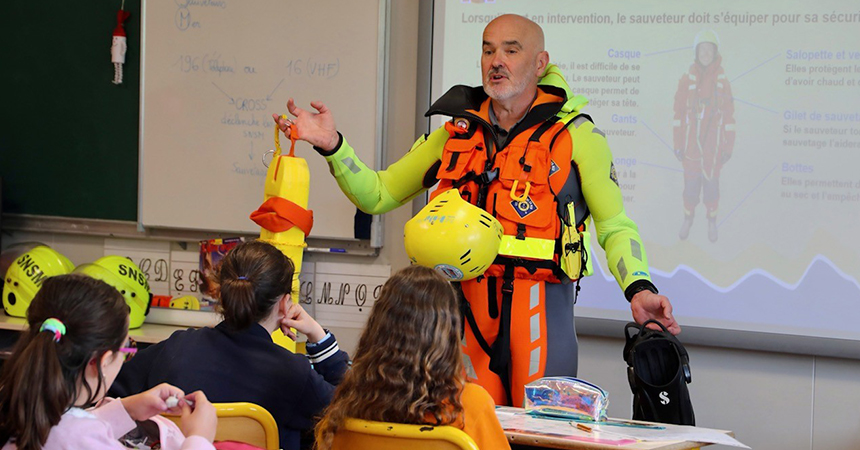
Martial providing sea-safety awareness education on behalf of Société Nationale de Sauvetage en Mer (SNSM), or French National Sea Rescue Society
The message is clear: the sea is magnificent, but it doesn’t forgive carelessness. Small actions — sunscreen, a cap, a fastened life jacket — are often the first line of protection. When responsibility is tied to everyday decisions, it stays with them. Parents tell us their children remind them to stay safe, and schools invite us back year after year. These moments prove that prevention works.
Whether at sea or on a production line, the principle is the same. Conditions change, details matter and vigilance protects lives.
Shared Commitment Creates a True Safety Culture
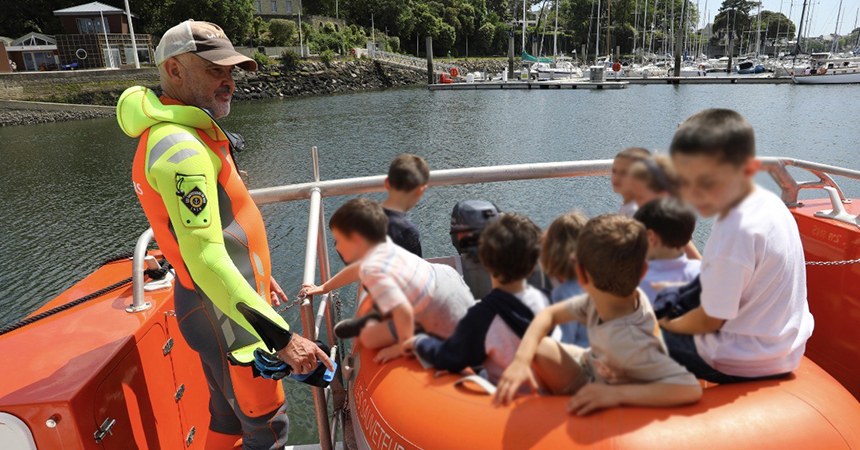
Martial volunteering with Société Nationale de Sauvetage en Mer (SNSM), or French National Sea Rescue Society, for sea-safety awareness
To me, a safety culture isn’t just a slogan posted on a wall. It’s a shared mindset: the right to say “stop”, transparency about mistakes, and the willingness to learn together. At SNSM, just as at Atmus, I’ve found that same level of commitment: safety isn’t a constraint; it’s a collective responsibility. Protecting others starts with disciplined internal practices, clear standards and a commitment to doing things the right way — every time.
Rigor, observation and the ability to quickly diagnose a problem are reflexes I use just as much on a production line as during an intervention. There have been times at sea when I detected a mechanical issue simply because I was used to listening carefully or paying close attention to a manufacturing process. Sometimes, it’s the small details that make all the difference.
Seeing the Impact Gives Work Meaning
Engine reliability is nonnegotiable on a rescue vessel. A single faulty filter can lead to power loss, mechanical failure or critical clogging — and at sea, that can mean not reaching someone in time. Filtration is fundamental to engine safety.
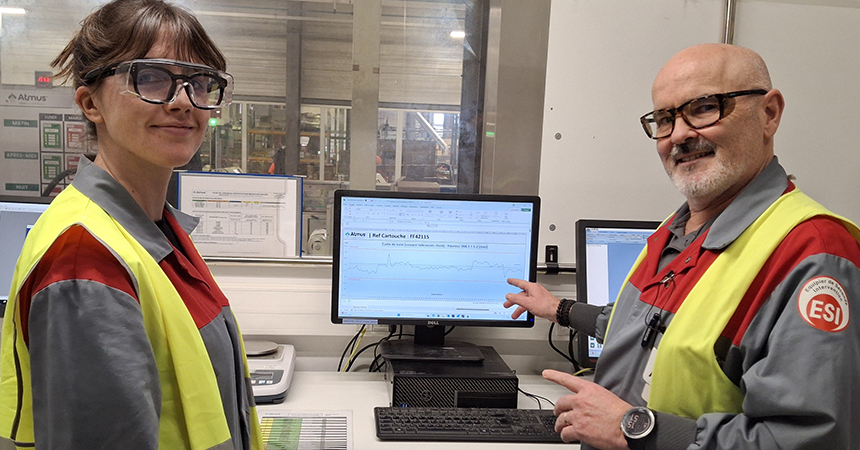
Pictured from left to right are Marion Nedelec, trainee and Martial Le Fournis, quality technician
Knowing that the filters we produce are used on rescue boats gives my work real meaning. What we do at Atmus can, in a very real way, help save lives. It also carries a profound responsibility: when you know where your products end up, “good enough” is never acceptable. Every component must meet — and exceed — the highest quality and performance standards.
Seeing the real-world impact of a breakdown or error at sea has shaped how I work every day. When lives are on the line, precision, discipline and accountability are not optional — they are essential.
Protecting the Environment Helps Protect People
You never truly “master” the marine environment; you learn to respect it, observe it and anticipate it. This constant vigilance directly influences people’s safety.
Preserving the marine environment isn’t a luxury; it’s an integral part of protecting those who navigate and make a living from the sea. Clean water, healthy ecosystems and stable coastlines create safer conditions for everyone. People and ecology reinforce each other when both are protected.
For me, protection isn’t an abstract idea. It’s something you practice, day after day, through discipline, vigilance and respect for others. Whether on a production line or at sea, the same principle applies: lives depend on the choices we make when no one is watching. That belief gives my work meaning. Knowing that what we do at Atmus helps protect people, the environment and those who risk their lives for others is a responsibility I carry with pride — and one I never take lightly.


